
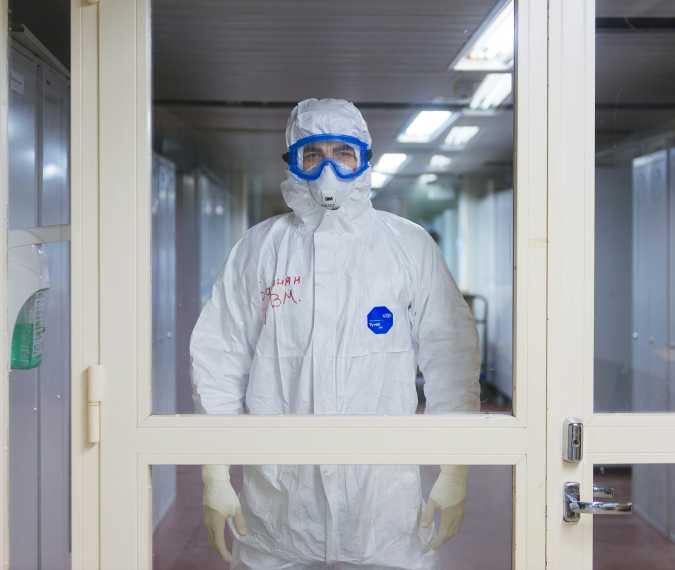
Major US Airports Begin Ebola Screenings As Outbreak Continues To Spread
Several major airports across the United States have introduced enhanced Ebola screening procedures as health officials monitor a growing outbreak in Central Africa. The virus, which has spread rapidly within the Democratic Republic of the Congo (DRC), has raised international concern after hundreds of infections and fatalities were reported.
According to global health authorities, the outbreak has surpassed 900 suspected cases, with more than 220 deaths linked to the disease. The World Health Organization (WHO) has classified the situation as a public health emergency due to the rapid transmission and the virus's expanding geographic reach.
The outbreak has also affected foreign medical workers operating in the region. An American doctor, Dr. Peter Stafford, contracted Ebola while assisting patients in the DRC. Reports indicate he was exposed during surgery on a patient who was later believed to have died from the virus. After testing positive, Stafford was transferred to Berlin, Germany, using a specially designed medical isolation unit. He is currently undergoing treatment at Charité University Hospital.
In response to the crisis, the US Department of Homeland Security has tightened travel protocols for passengers arriving from countries considered high-risk, including the DRC, Uganda, and South Sudan. Travelers from these regions are now required to enter through Washington-Dulles International Airport in Virginia, where additional medical screening measures have been implemented.
Health officials are particularly concerned because infections have already appeared in neighboring Uganda, including cases reported near heavily populated urban centers such as Kampala. Experts fear that wider transmission in densely populated cities could make containment more difficult.
The current outbreak involves the Bundibugyo strain of Ebola, a variant for which there is still no fully approved vaccine or dedicated treatment. WHO Director-General Tedros Adhanom Ghebreyesus warned that the virus spreading into urban areas significantly increases the challenge facing international health teams.
Authorities are continuing efforts to slow the outbreak through contact tracing, isolating infected individuals, and closely monitoring suspected cases. The Centers for Disease Control and Prevention (CDC) has also sent specialists to support on-the-ground containment operations.
Although the epidemic remains concentrated in Central Africa, US health agencies stress that the overall risk to the American public is still considered low at this time.