
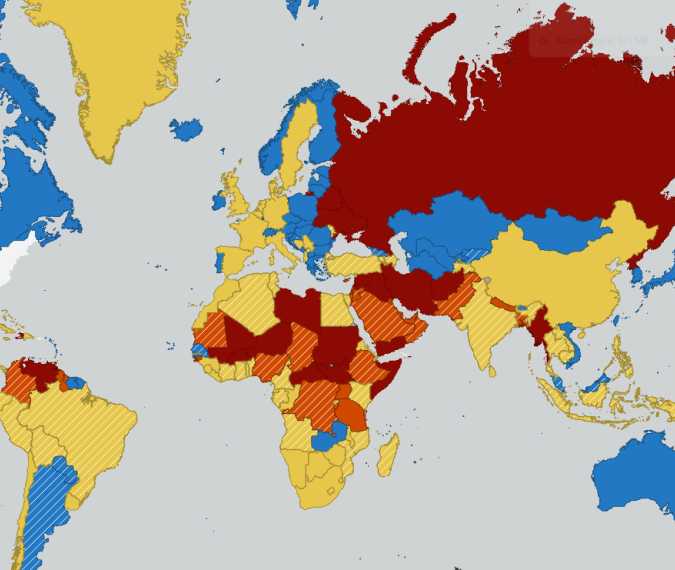
New U.S. Travel Advisory Map Highlights Risky Destinations Worldwide
The U.S. State Department has launched an updated international travel advisory page that includes a global interactive map, helping travelers quickly identify destinations with potential safety risks.
The tool allows users to click on any country to view its current travel advisory level and the main reasons for the warning.
Four Levels of Travel Warnings
Countries around the world are categorized using a four-tier system designed to inform travelers about possible risks.
Level 1 – Exercise Normal Precautions: The lowest advisory level, indicating typical travel conditions.
Level 2 – Exercise Increased Caution: Travelers should remain alert, especially in areas that may pose higher risks.
Level 3 – Reconsider Travel: Serious safety concerns exist, and travelers are advised to carefully evaluate whether their trip is necessary.
Level 4 – Do Not Travel: The highest warning level, issued when conditions are considered extremely dangerous.
These advisories are determined based on several factors, including crime rates, armed conflict, terrorism, health risks, and civil unrest.
A Map That Updates Daily
One of the most useful features of the system is the interactive global map, which is updated every day. Travelers can search for any country and immediately see its advisory level, along with detailed explanations of the risks involved.
The map uses a color-coded system to make it easier to understand at a glance:
Blue – Level 1 (Normal precautions)
Yellow – Level 2 (Increased caution)
Red – Level 3 and Level 4 advisories
This visual format allows travelers to quickly spot regions that may require additional planning or caution.
Countries Under the Highest Warning
The map also highlights destinations considered particularly dangerous. The Level 4 “Do Not Travel” category includes countries facing severe security challenges such as ongoing conflict or widespread crime.
While earlier reports listed 22 countries under this highest warning, the number has since increased to more than two dozen destinations, reflecting the constantly changing global security situation. These include Afghanistan, Belarus, Haiti, and Lebanon, among others.
Staying Safe While Traveling Abroad
Although many regions remain safe to visit, officials encourage travelers to stay informed before heading overseas. Checking the advisory map, reviewing country-specific warnings, and monitoring updates can help travelers make smarter decisions about their trips.
By using the State Department’s interactive advisory tool, travelers can better understand potential risks and take extra precautions when exploring destinations around the world.