
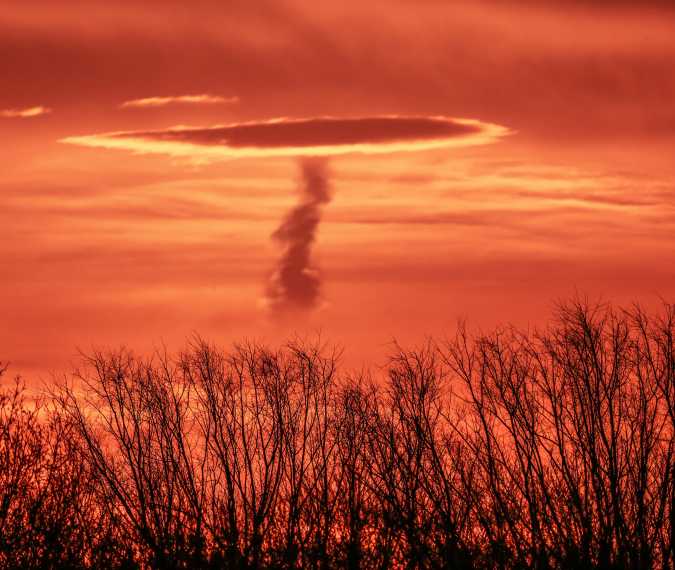
Two crucial things to do in first 45 minutes of nuclear attack to give yourself best chance of survival
Being caught in an emergency far from home can be frightening, especially when you are unfamiliar with local buildings and warning systems. In a nuclear emergency, the immediate priorities are to get inside, remain sheltered, and follow official instructions. These actions can reduce exposure to radioactive fallout.
Find shelter as quickly as possible.
If you see a nuclear flash while outdoors, avoid looking at it. Take cover behind anything that offers protection, lie flat, and protect your head. Once the blast wave has passed, seek shelter as soon as you can.
A basement or a substantial brick or concrete building offers better protection than a vehicle. Once indoors, move toward the basement or the center of the building, staying away from windows, exterior walls, and the roof. If a stronger building is not close enough to reach within a few minutes, getting inside a nearby building is safer than remaining outdoors.
Do not treat the first 45 minutes as a safe period to travel. Emergency guidance stresses reaching shelter promptly, before fallout arrives. For travelers, this means prioritizing nearby protection instead of attempting to return to a distant hotel or make your own evacuation journey. New Zealand’s SafeTravel service advises waiting until authorities identify hazardous areas and establish safe evacuation routes.
Remove contamination once you are inside.
If you were outdoors during or after the explosion, carefully remove your outer clothing. This can remove up to 90% of radioactive material. Put the clothing in a plastic bag, seal it, and keep it away from people and pets.
When possible, shower with soap and water, washing gently without scratching or scrubbing your skin. Wash your hair with shampoo or soap, but skip conditioner, which can make radioactive particles cling to your hair and be harder to rinse away.
If a shower is unavailable, use a clean, damp cloth or wipe to clean exposed skin.
Stay sheltered and monitor official updates.
Plan to remain inside for at least 24 hours, following instructions from emergency authorities. Passing 24 hours does not automatically mean it is safe to leave. Monitor official alerts through available radio, television, or phone services; a battery-powered radio can help if other communications fail.
If you are traveling with others who are sheltering elsewhere, avoid going outside to collect them. The CDC advises remaining sheltered rather than exposing yourself and loved ones to radiation during an attempted reunion. Leave when officials say it is safe, or if a life-threatening situation makes staying impossible.

