16 Amazing Things to Do in Ostuni, Italy – Discover Puglia’s White City
Perched high on a hill under the southern Italian sun, Ostuni is one of Puglia’s most striking destinations. Its bright white houses cascade down the hillside, earning it the nickname La Città Bianca, the White City.
From its elevated position, Ostuni overlooks olive groves spanning the Valle d’Itria, with the Adriatic coastline just 8 kilometres away. Beautiful beaches, atmospheric streets, and regional cuisine make it a highlight of any Puglia itinerary.
We always make time to visit Ostuni whenever we explore this region — strolling through its winding alleys, tasting local specialities, and discovering the rural landscapes just outside town (ideally while staying on a traditional olive farm).
Below you’ll find our favourite experiences in Ostuni, including a few worthwhile day trips, plus practical tips about getting there and where to stay.
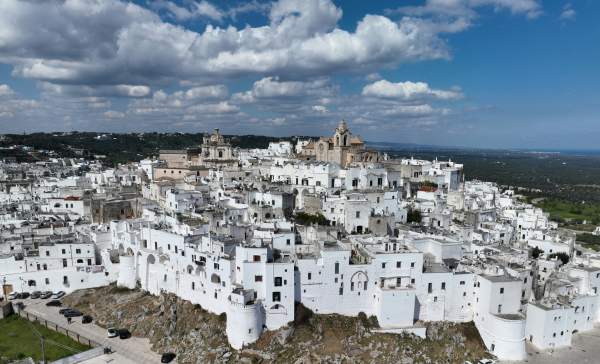
Photo: unsplash.com/@freys
Where Is Ostuni Located?
Ostuni sits in southern Italy within the region of Puglia — the “heel” of the Italian boot. The town belongs to the province of Brindisi, whose port city and airport are about 42 km away, roughly a 30-minute drive.
Two other major destinations are close by: Bari lies about an hour to the north, while Lecce is around the same distance to the south. The distinctive trulli houses of Alberobello can be reached in approximately 40 minutes by car.
Best Things to Do in Ostuni
1. Wander Through the Old Town
Exploring Ostuni’s historic centre is an absolute must. Built in medieval times without any clear urban plan, the old town feels like a labyrinth of narrow passageways, staircases, arches, and hidden corners.
Houses were built tightly together, sometimes even stacked, with connecting archways that helped support the structures. As you meander through the tangled streets, you might suddenly encounter a dead end — or unexpectedly glimpse the shimmering sea in the distance.
Over centuries, the region was invaded by numerous civilisations, including Greeks, Romans, Goths, Byzantines, and Normans. The town’s confusing layout may once have served as a clever defence strategy.
Today, getting lost here is simply part of the charm. The whitewashed walls gleam in the sunshine, decorated with colourful doors, potted geraniums, and cacti.
The tradition of painting buildings white dates back to the 17th century, when limewash — a mixture containing limestone — was used during a devastating plague outbreak. Its natural antibacterial qualities likely helped reduce the spread of disease. Today, locals continue to maintain the bright appearance, with authorities even contributing to repainting costs.
For deeper insight into the town’s past, joining a guided walking tour is a great way to uncover hidden stories and architectural details.
2. Browse Local Shops and Boutiques
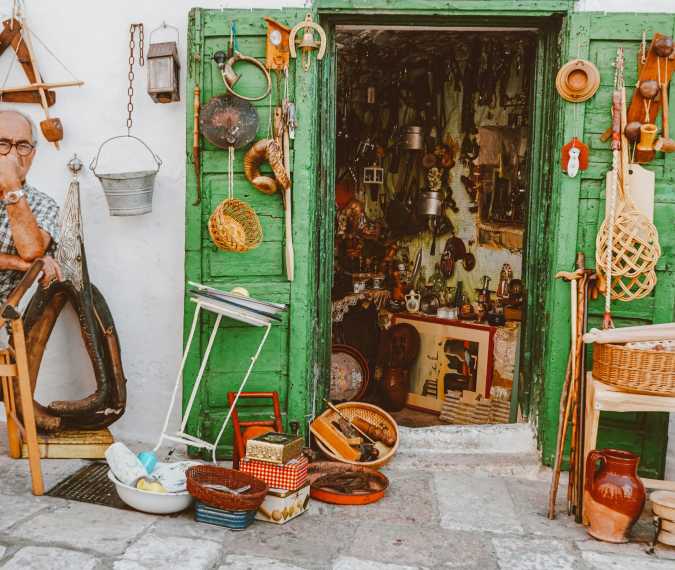
Via Cattedrale is the main street running through the old town, connecting Piazza della Libertà at the base of the hill with the cathedral above. Along the way, you’ll find small shops selling regional products such as olive oil, wine, handmade sandals, and summer clothing.
During peak season, the street can be lively and crowded, but in quieter months, it offers a more relaxed shopping experience. If you turn into the side alleys, you may even stumble upon local artisans — like woodworkers crafting kitchen utensils from olive wood using traditional techniques.
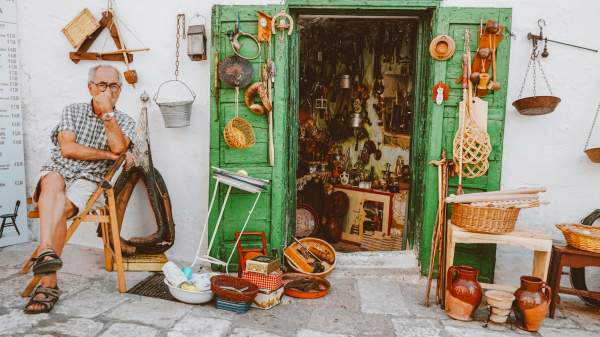
Photo: unsplash.com/@josedibattista
3. Visit Ostuni Cathedral
At the highest point of the town stands the impressive Cathedral of Santa Maria Assunta. Built in the 15th century, it features late Gothic architecture — a style not commonly seen in this part of Puglia, where Romanesque and Baroque influences dominate.
The cathedral’s elegant façade draws the eye upward, while the intricate rose window is especially striking. Christ is depicted at its centre, surrounded by finely sculpted columns symbolising the hours of the day.
A small square nearby offers pleasant places to sit for a drink and admire the view.
4. Join a Sightseeing Tour
Although the historic centre is compact enough to explore independently, taking a guided tour can add valuable historical context. Private walking tours typically last around 90 minutes and often include entry to key landmarks such as the cathedral.
Visitors with limited mobility can also explore the hilltop town in a small, open-sided vehicle similar to a tuk-tuk, which makes it easier to reach the upper streets.
5. Enjoy Panoramic Views
For sweeping vistas over the countryside, head to the uppermost part of the old town. After passing through Arco Scoppa — a decorative stone archway linking two buildings — you’ll discover viewpoints overlooking ancient olive groves and the distant Adriatic Sea.
Nearby cafés and wine bars provide ideal spots to relax with an aperitivo while soaking up the scenery.
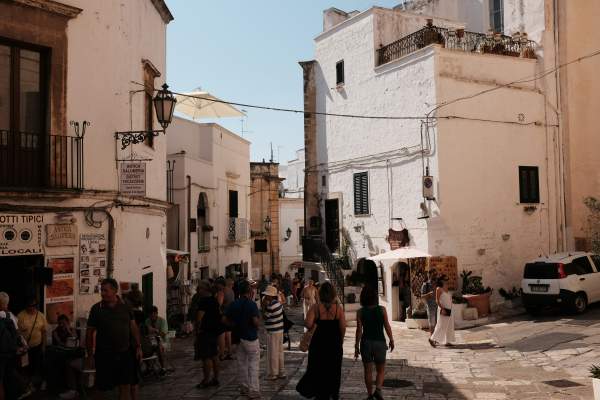
Photo: unsplash.com/@jxduran
6. Experience Piazza della Libertà
At the foot of the old town lies Piazza della Libertà, the town’s main square and a lively gathering place. From here, most visitors begin their climb into the historic centre.
Key sights include the ornate Baroque column dedicated to Saint Oronzo, Ostuni’s patron saint, and the Church of San Francesco d’Assisi. The square is also a good place to enjoy a reasonably priced coffee, snack, or light meal before heading uphill.
7. Enjoy Gelato While You Stroll
No visit to an Italian town feels complete without gelato. Several gelaterias around Ostuni serve artisan flavours, including vegan options. Picking up a cone and wandering through the sunlit streets is one of the simplest pleasures here.
8. Explore the Saturday Market
If you’re in town on a Saturday morning, don’t miss the weekly market held just outside the centre. Mostly frequented by locals, it’s an authentic place to discover regional produce and specialities.
Stalls overflow with seasonal fruit and vegetables, nuts, cheeses, herbs, seafood, and traditional snacks such as taralli — crunchy bread rings flavoured with fennel, chilli, or onion. You may also encounter lupini beans, a brined legume that is eaten by removing the skin with your teeth.
Visitors should remember that in Italian markets it’s customary to ask vendors for items rather than touching the produce themselves.
9. Visit a Traditional Masseria
The countryside surrounding Ostuni is dotted with masserie — historic farmhouses converted into guest accommodations. Staying at one offers a peaceful rural experience among olive groves, often with excellent home-grown meals included.
Even if you don’t spend the night, many masserie welcome visitors for lunch or dinner featuring local ingredients and freshly pressed olive oil.
10. Taste Local Olive Oil
Puglia is one of Italy’s most important olive-growing regions, and sampling high-quality olive oil is a highlight. Many trees in the area are centuries old, with some believed to be nearly a thousand years in age.
Guided tastings and cycling tours through the groves offer fascinating insight into traditional production methods.
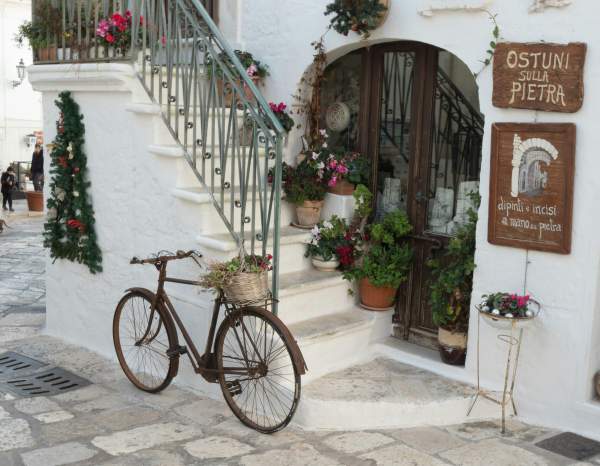
Photo: unsplash.com/@shabalayar
11. Spend Time at the Beach
Ostuni’s coastline is only a short drive away, with sandy beaches and beach clubs lining the Adriatic shore. It’s easy to combine sightseeing in town with a relaxing afternoon by the sea.
12. Photograph the Town from a Viewpoint
Stepping outside the historic centre offers excellent vantage points to admire Ostuni’s white skyline rising above the countryside — especially beautiful at sunset.
Day Trips from Ostuni
13. Cisternino
A charming hill town known for its flower-filled streets and relaxed atmosphere.
14. Locorotondo
Often ranked among Italy’s prettiest villages, it is famous for its circular old town and balconies bursting with blooms.
15. Alberobello
A UNESCO World Heritage site celebrated for its iconic trulli houses with conical roofs.
16. Polignano a Mare
A dramatic coastal town perched on limestone cliffs above the turquoise Adriatic Sea.