
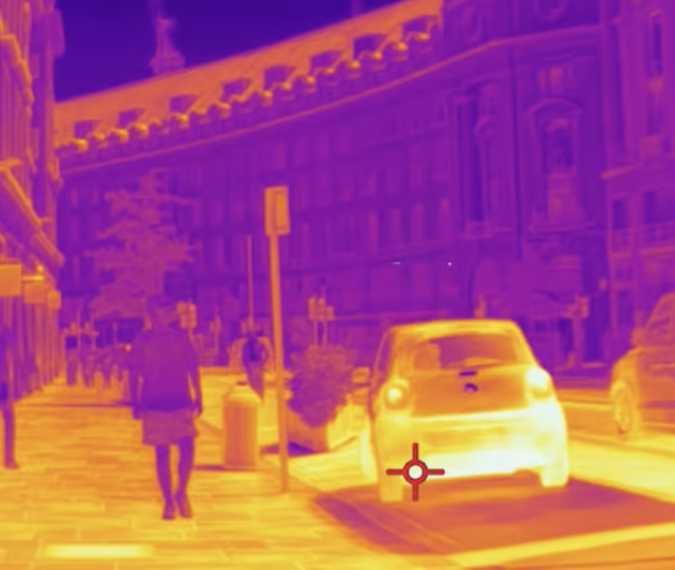
London 'cauldron': Oxford Street and Regent Street hit 56C amid record heatwave
London experienced exceptionally high temperatures during the latest heatwave, with thermal imaging revealing that some streets, public spaces, and transport platforms reached significantly higher temperatures than the surrounding air.
Air temperatures in the capital were around 35°C on Wednesday, but infrared camera footage showed surface temperatures climbing far higher. Regent Street reached approximately 57°C, while Oxford Street and Piccadilly Circus recorded around 56°C.
One of the hottest locations measured was the London Overground platform at Highbury & Islington station, where temperatures peaked at 62°C. Meanwhile, the granite paving in King's Cross Square reached around 54°C, highlighting how different urban materials absorb and retain heat.
Other public areas also experienced intense conditions. A playground in Islington, covered with black rubber safety flooring, registered 53°C, demonstrating how dark surfaces can become dangerously hot under direct sunlight. Inside London's transport network, the floor of a Victoria Line train reached about 40°C.
Underground travel became particularly uncomfortable as temperatures rose across the Tube network. Reports said passengers faced oppressive conditions, with the Central line recording the highest air temperature at approximately 39.4°C, making it the hottest line on the network.
The thermal images were collected for Greenpeace UK to illustrate the growing impact of extreme heat on life in the capital. The organization says the findings highlight the increasing challenges posed by rising temperatures in densely populated urban areas.
Analysis from City Hall estimates that nearly one million homes across London are vulnerable to overheating. In addition, around 1,361 schools, 60 hospitals, and 351 care homes could face significant heat-related risks during prolonged periods of high temperatures.
The ongoing heatwave has already disrupted normal life, with several schools, businesses, and offices temporarily closing as temperatures continued to climb.
Mel Evans, Greenpeace UK's Head of Climate, described the situation as evidence of a growing public health challenge. She said the record-breaking heat had transformed London into an intensely hot city, arguing that climate change, driven by fossil fuel emissions, is increasing the frequency and severity of such events. Evans also called on the government to introduce a comprehensive strategy for extreme heat, including measures to improve home and school cooling, expand shaded and green spaces, strengthen workplace protections, and provide greater support for vulnerable communities.