
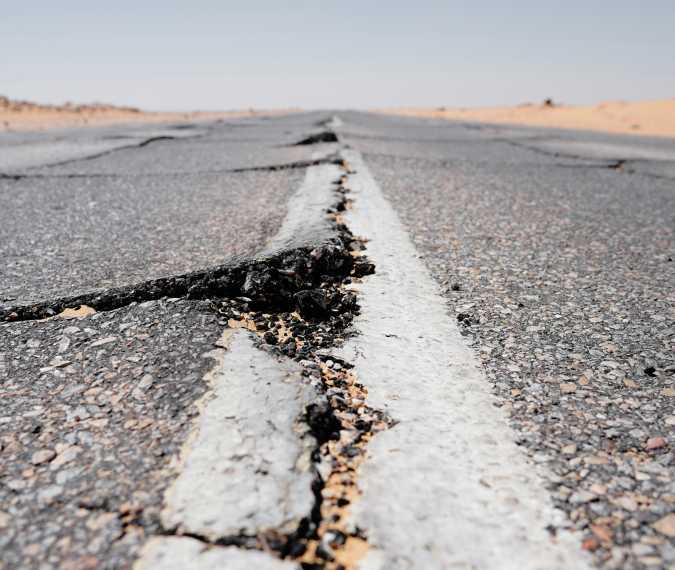
Once-in-a-century earthquake strikes Texas with shockwaves felt across multiple states
Residents across the Texas Panhandle were jolted awake early Thursday after a magnitude 5.0 earthquake struck the region, making it the strongest seismic event recorded there in more than a century.
According to the U.S. Geological Survey (USGS), the earthquake occurred at approximately 4:21 a.m. Mountain Time. Its epicenter was located roughly 23 miles from the town of Spearman, with tremors extending well beyond Texas into neighboring Oklahoma and Kansas.
Many people shared their experiences on social media after feeling the unexpected shaking. One Texas resident described waking to a vibrating bed before learning an earthquake had occurred nearby, while others in Spearman said the sudden movement left them confused and startled. In Norman, Oklahoma, residents also reported light shaking after receiving earthquake alerts.
Despite the strength of the quake, local emergency officials said there were no immediate reports of injuries or significant property damage. Earthquakes of this magnitude can occasionally cause minor structural impacts, but no major incidents had been confirmed following the event.
The USGS noted that this was the strongest earthquake ever documented in the Texas Panhandle since modern records began, and only the fourth earthquake of magnitude 4.0 or higher to affect the area since 1900.
Experts believe the earthquake resulted from natural movement along underground fault lines, where built-up stress was released as sections of rock shifted beneath the Earth's surface.
Residents in nearby communities described dramatic moments during the shaking. Micah Starrett, from Miami, Texas, said the entire house shook for around 10 to 20 seconds, waking all of the children in the home and triggering motion-activated lights. Another resident, Melissa Davis Hale, recalled hearing a loud roaring sound before her house rattled for nearly 45 seconds, while others reported objects falling from shelves.
Although natural fault movement caused the earthquake itself, scientists have previously linked the recent rise in seismic activity across the Texas Panhandle to wastewater disposal associated with oil and gas production. Injecting large volumes of wastewater deep underground can increase pressure along ancient fault systems, making it easier for existing faults to slip and generate earthquakes.
While communities in the Panhandle assessed the effects of the quake, another weather threat was developing farther south. Tropical Storm Bertha was forecast to move toward the upper Texas and Louisiana Gulf Coast later Thursday.
A Tropical Storm Warning remained in effect from the Terrebonne-Lafourche Parish line in Louisiana westward to Sargent, Texas. The storm was located about 145 miles west-southwest of New Orleans and was expected to travel along the coastline before moving inland across Texas during the evening.
The National Oceanic and Atmospheric Administration (NOAA) warned that parts of the Texas Gulf Coast and South Texas could receive between two and four inches of rainfall, with isolated locations potentially seeing as much as six inches. Heavy rain may lead to localized flash flooding, especially in cities and low-lying areas.
Forecasters also cautioned that coastal communities could experience strong tropical-storm-force winds, dangerous surf, and hazardous rip currents. Meanwhile, areas north of Houston were expected to see little rainfall but continue to endure intense heat, with heat index values approaching 108°F under an active heat advisory.