
Safest countries in Europe to be in if WW3 breaks out after Switzerland issues chilling warning
Europe’s security concerns have raised an unsettling question for travellers: if a wider war broke out, where might the risks be lower?
Switzerland’s Security Policy Strategy 2026 reflects those concerns, with a focus on strengthening resilience, protecting the population and improving defence capabilities. However, these preparations should not be mistaken for a prediction that world war is inevitable.
No country can be guaranteed safe in a hypothetical global conflict. The risks would depend on who was involved, where fighting occurred and how transport, communications and essential supplies were affected. Nevertheless, geography, military alliances and civilian preparedness offer useful ways to examine the five countries below. This is a comparison of those factors, rather than a definitive safety ranking.
Switzerland: civilian preparedness matters
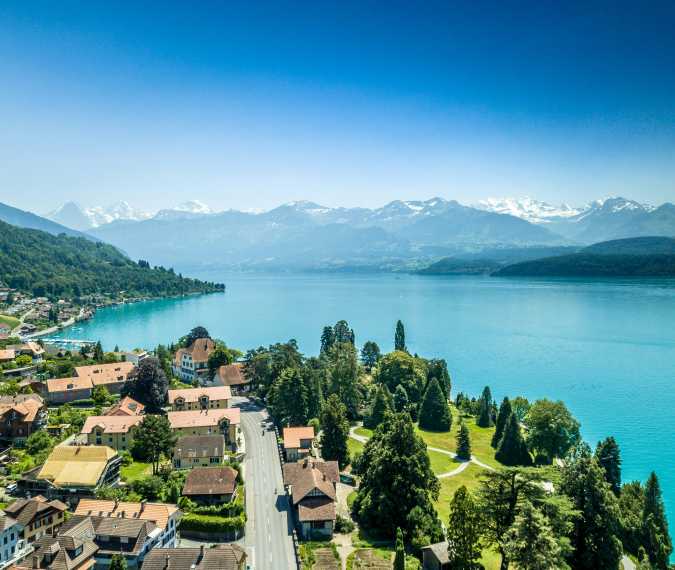
Switzerland’s reputation for neutrality is only part of its security picture. Its extensive shelter network provides a more concrete example of preparedness: the Federal Office for Civil Protection reports around nine million places across approximately 370,000 public and private shelters.
That infrastructure is relevant to civilian protection, but it does not make Switzerland immune to a wider European emergency. Travellers should also avoid assuming that shelter capacity automatically guarantees immediate access for every visitor; local instructions would matter during a crisis.
Ireland: military neutrality and an Atlantic location
Ireland maintains a policy of military neutrality, characterised by non-membership of military alliances. Its cooperation with NATO through the Partnership for Peace does not make it a NATO member.
Its position on Europe’s western edge could provide distance from fighting centred in eastern Europe. That is a geographical consideration, not a forecast of safety. Disrupted flights, shipping or communications could still affect an island country even without direct military action.
Austria: neutrality in central Europe
Austria is militarily neutral and does not belong to NATO. Its government nevertheless makes clear that neutrality does not mean indifference to breaches of international law.
One geographical detail deserves correction: Austria does not share a border with Ukraine. Slovakia and Hungary, both Austrian neighbours, do.
Austria’s neutrality is relevant when considering its potential involvement in a conflict, but its central European location would still leave it exposed to disruption across neighbouring countries. Neutral status alone cannot establish how safe it would be.
Portugal: distance with limits
Portugal’s location on the Atlantic side of the Iberian Peninsula puts it farther from eastern Europe than many continental destinations. In a conflict concentrated in the east, that distance could be an advantage.
Portugal is also a founding NATO member, making its security closely connected to the alliance.
It would therefore be misleading to describe Portugal as insulated from a wider war. Distance from ground fighting does not eliminate risks involving long-range weapons, cyberattacks or interrupted supplies.
Denmark: strategic importance complicates the picture
Denmark is another founding NATO member. Greenland, which forms part of the Kingdom of Denmark, also connects the country to Arctic security—an area NATO identifies as strategically important.
Those connections make a simple “safe haven” label difficult to justify. Alliance membership brings collective defence, while strategic importance may create exposure in some conflict scenarios. Greenland’s location is not, by itself, evidence that mainland Denmark would be safer.
For anyone planning a trip, current official travel advice is more useful than a speculative wartime ranking. Check destination guidance, transport arrangements and insurance terms before departure. British travellers should remember that travelling against Foreign, Commonwealth & Development Office advice could invalidate their insurance.

