Santorini Moves to Protect Donkeys by Limiting Rider Weight
Few visitors to Santorini think about animal welfare when planning their trip. Still, the island’s iconic donkeys have recently brought the issue into the spotlight—especially as tourism numbers continue to soar.
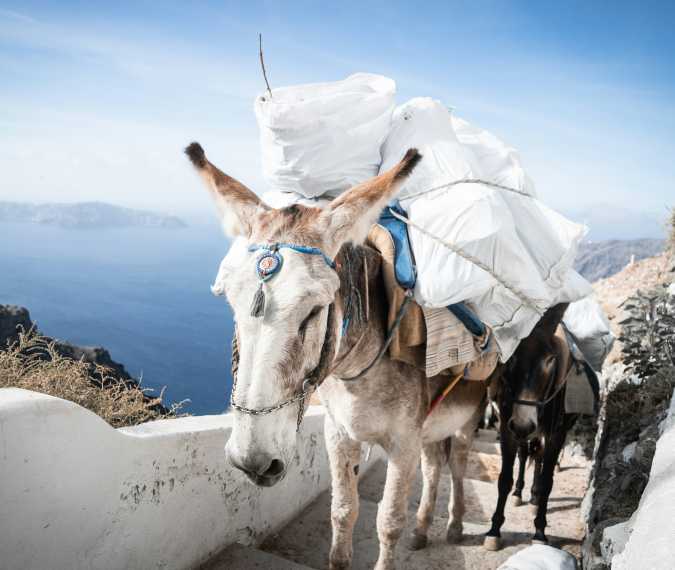
Santorini’s dramatic volcanic landscape attracts millions of travellers each year, many of whom arrive by cruise ship. To reach Fira, the island’s main town perched roughly 400 metres above sea level, visitors must climb more than 600 steep steps from the old port. Tourists generally choose between walking, taking the cable car, or riding a donkey or mule.
With only a handful of cable car cabins available and thousands of passengers arriving daily, many visitors opt for animal transport—particularly in the intense summer heat. According to local officials, this surge in demand has taken a serious toll on Santorini’s working animals.
Veterinarians and animal welfare organisations have reported an increase in spinal injuries, open sores from ill-fitting saddles, and severe exhaustion among donkeys and mules. These concerns escalated last summer after footage and photos of mistreated animals circulated online, prompting international animal welfare groups to visit the island.
In response to mounting pressure, the Greek government has introduced new legislation to protect equines. The proposed law would prohibit animals from carrying loads exceeding 100 kilograms (15 stone) or more than 20 percent of their body weight. Although tourists are not explicitly mentioned, the regulation effectively prevents overweight riders from using donkeys and mules.
The weight limit is expected to be incorporated into a wider equine registration system, which will require all donkeys, horses, and mules to be individually identified through official passports. Parliament is expected to ratify the measure in the coming weeks.
Animal welfare advocates have welcomed the move. Representatives from international organisations have long argued that while Greece has strong animal protection laws on paper, enforcement has often fallen short. They stress that responsibility lies not only with animal owners, but also with tourists, who should consider whether riding an animal is appropriate.
Public support has been significant. A petition calling for an end to the mistreatment of donkeys and horses in Santorini garnered nearly 109,000 signatures, underscoring global concern for their well-being.
Santorini’s mayor has publicly backed the new regulations and announced additional measures, including the construction of shaded rest areas and water troughs at the port. These improvements have been repeatedly requested by welfare groups, who plan to return later this year to assess conditions.
Overtourism has been a growing challenge for the island. In 2017 alone, Santorini welcomed approximately 2.4 million visitors, of whom more than 700,000 arrived by cruise ship. Despite covering less than 76 square kilometres and supporting a permanent population of around 25,000 residents, the island has struggled to keep pace with demand. As tourism increased, additional donkeys and mules were brought in from abroad to meet transport needs.
Local authorities maintain that most animal owners care for their donkeys properly, noting that their livelihoods depend on the animals’ health. However, isolated cases of abuse have raised enough concern to justify stricter oversight.
To ease pressure on both infrastructure and animals, the mayor has also placed limits on the number of cruise passengers allowed to disembark each day. Full enforcement of these restrictions is expected soon, to make life on the island more manageable—not only for residents and visitors, but for Santorini’s donkeys and mules as well.