Scientists have found two 'untouched' worlds hidden in the ocean in groundbreaking discovery
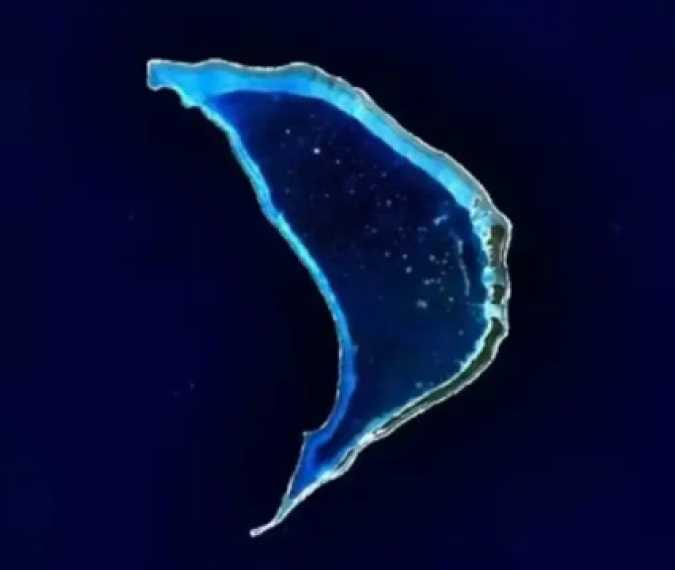
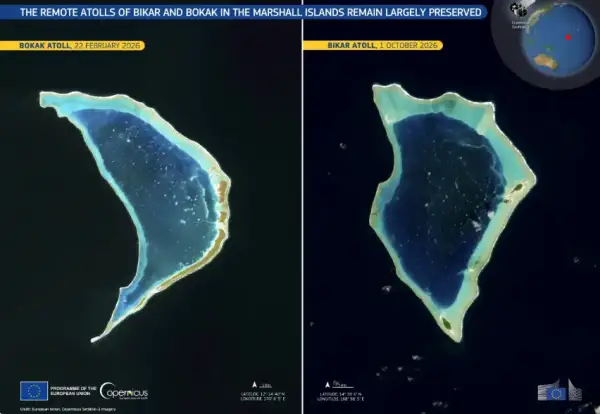
If a damaged reef begins to recover, how will anyone know when it is healthy again? In the northern Marshall Islands, two coral atolls offer an answer that might surprise someone who counts only coral. At Bokak, living coral covers much of the reef. At Bikar, algae are more prominent. Yet both support sharks and other large predators that have grown scarce on many Pacific reefs. A healthy reef, it turns out, can look quite different from its neighbor. www.frontiersin.org
From the nesting beaches to the deep sea
The people of Utirik Atoll have long cared for Bikar and Bokak. In 2023, a team from the Marshall Islands Marine Resources Authority and National Geographic Pristine Seas received a traditional blessing on Utirik before setting out to survey the two atolls. Bikar lies about 116 kilometers from the nearest inhabited atoll. To reach Bokak from the nearest inhabited atoll, a boat must cover roughly 385 kilometers of open Pacific. www.popularmechanics.com
On Bikar, the researchers found dense seabird colonies in a mature forest of native Pisonia trees and evidence of turtles nesting on the beaches. Those birds may help sustain life beyond the shoreline. Seabirds feed at sea and deposit nutrients in their droppings when they return to roost. Some of those nutrients can reach the surrounding reef, linking the fish offshore to the birds in the canopy. www.frontiersin.org
Offshore, scuba divers surveyed the shallows, a submersible followed the deeper reef slopes, and baited cameras recorded animals as far as 2,000 meters below the surface. Some of the most intriguing sightings came from the submersible. The team documented 14 kinds of fish that appeared to be previously unrecorded in the Marshall Islands. Researchers could identify two fish only to their genus. Whether either belongs to a species new to science remains an open question. Answering it will require specimens that researchers can examine and, where necessary, test genetically. www.frontiersin.org
What the atolls can teach us about recovery
For scientists working on damaged reefs, even the familiar fish in the survey have a story to tell. Grey reef sharks and whitetip reef sharks were common, and sharks accounted for the largest share of fish biomass on the outer reefs of both atolls. That gives restoration teams a concrete point of comparison. Alongside the area covered by coral, they can track which predators return and whether the reef can sustain them over time. www.frontiersin.org
In 2025, the Marshall Islands designated roughly 48,000 square kilometers around Bikar and Bokak as the country’s first national marine sanctuary, building on generations of stewardship by Utirik. The expedition left a record that future surveys can revisit. Researchers can return to the same reef slopes, count fish and measure coral cover, and see how each atoll changes against its own history. For anyone trying to understand what a reef can recover, that history is a rare starting point. www.popularmechanics.com

