Study: Lake Mead water levels projected to drop 30 feet by 2028
A recently released federal forecast suggests that water levels at Lake Mead may continue their downward trend over the next several years, raising concerns about water management and hydroelectric power production across the Southwest.
The latest 24-Month Study from the U.S. Bureau of Reclamation indicates that Lake Mead could fall to approximately 1,015 feet above sea level by July 2027. Projections show the reservoir may decline even further, reaching around 1,011 feet by May 2028 if current conditions persist.
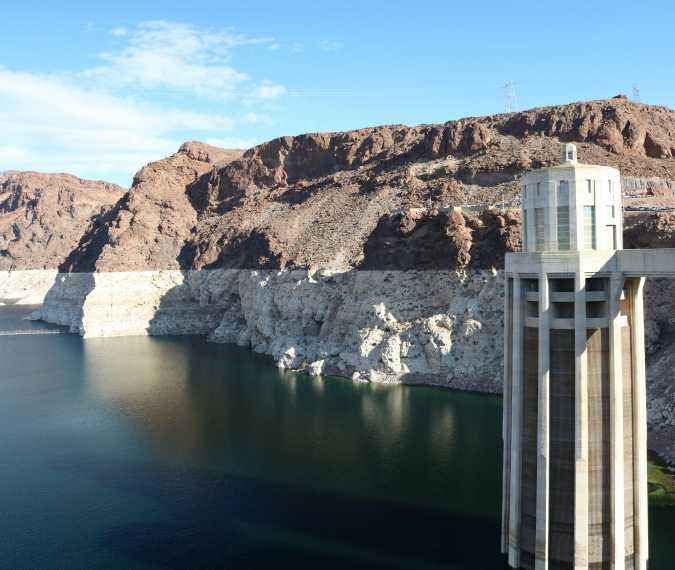
Lake Mead has already experienced historic lows in recent years. In 2022, the reservoir dropped to a record level of 1,040 feet above sea level, exposing previously submerged rock formations and long-forgotten boats that had remained underwater for decades.
The continued decline presents challenges for hydroelectric power generation at Hoover Dam. Experts note that when lake elevations fall below 1,035 feet, the dam's ability to generate electricity is significantly reduced.
In response to ongoing drought conditions, the U.S. Department of the Interior announced emergency drought-management measures earlier this year. The plan calls for limiting water releases from Lake Powell to the lowest levels permitted under existing agreements in order to safeguard power production at Glen Canyon Dam. While this strategy helps protect one facility, it is expected to reduce Hoover Dam's generating capacity, potentially lowering electricity production by up to 40%.
At present, Lake Mead stands at roughly 1,046 feet above sea level. Despite prolonged drought conditions, Hoover Dam continues to produce approximately 1,302 megawatts of electricity.
Efforts to address the broader water challenges of the Colorado River Basin are also underway. Earlier this month, Nevada joined California and Arizona in signing a Memorandum of Understanding to create a framework for interstate water exchanges. Officials hope the agreement will help manage shrinking water supplies throughout the lower Colorado River Basin, although water authorities say discussions remain ongoing and no implementation timeline has been finalized.
As climate pressures and water shortages continue to affect the region, policymakers and water managers face increasing pressure to develop long-term solutions that balance water conservation, energy production, and the needs of millions of residents who depend on the Colorado River system.