
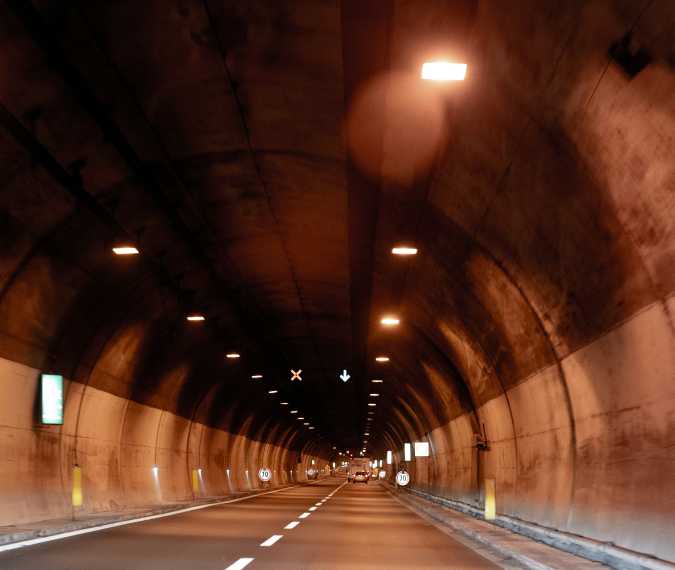
The ridiculous $18 trillion plan for incredible 3,100 mile tunnel between UK and US
The concept of a tunnel connecting the United Kingdom and the United States has been the stuff of dreams and speculation for more than a century. Imagine a 3,400-mile-long tunnel stretching under the Atlantic Ocean, allowing trains to whisk passengers between London and New York in less than an hour. Such an audacious project, known as the Transatlantic Tunnel, would bring the two nations closer together. Still, the staggering $18 trillion cost and the formidable engineering challenges make it seem more like science fiction than a feasible reality.
In its various conceptual forms, the Transatlantic Tunnel has captivated the imaginations of engineers and visionaries alike. The idea is simple: a tunnel beneath the Atlantic Ocean, connecting the UK to North America. However, the execution of such a project is anything but simple.
To put the scale of this proposed tunnel into perspective, consider the Channel Tunnel, which connects England and France. It runs under the sea for about 23.5 miles, a feat hailed as an engineering marvel when completed in 1994. The Transatlantic Tunnel, by comparison, would need to cover 3,400 miles, spanning depths where the ocean floor lies miles beneath the surface. The scale is nearly unimaginable, both in terms of the physical structure and the financial investment required.
Photo: unsplash.com/@lauraadaiphoto
The most fascinating aspect of the Transatlantic Tunnel isn't just its enormous scale and the futuristic transportation technologies proposed to make the journey viable.
Among the most popular ideas is using Vactrains—a magnetically levitated train traveling in a near-vacuum environment. By eliminating air resistance, these trains could theoretically reach up to 5,000 mph speeds. Such speeds could reduce the journey from London to New York to a mere 54 minutes, a commute shorter than most daily drives to work.
Another concept involves jet propulsion, where trains could accelerate to extreme speeds but would require significant time and distance—up to 18 minutes—to decelerate and come to a complete stop.
Despite recent decades' incredible potential and technological advances, the Transatlantic Tunnel remains firmly in the realm of speculation. The $18 trillion price tag is one of the most significant obstacles. To put that into perspective, $18 trillion is more than the GDP of many countries combined.
While the UK and US governments do not currently have serious plans to build this tunnel, the idea remains a fascinating "what if" scenario. As technology advances and global needs shift, who knows what might become possible in the coming centuries?
For now, the Transatlantic Tunnel is a testament to human imagination and ambition—a reminder that even the wildest dreams can capture the public's imagination and inspire us to think beyond the possible into the realm of the extraordinary.