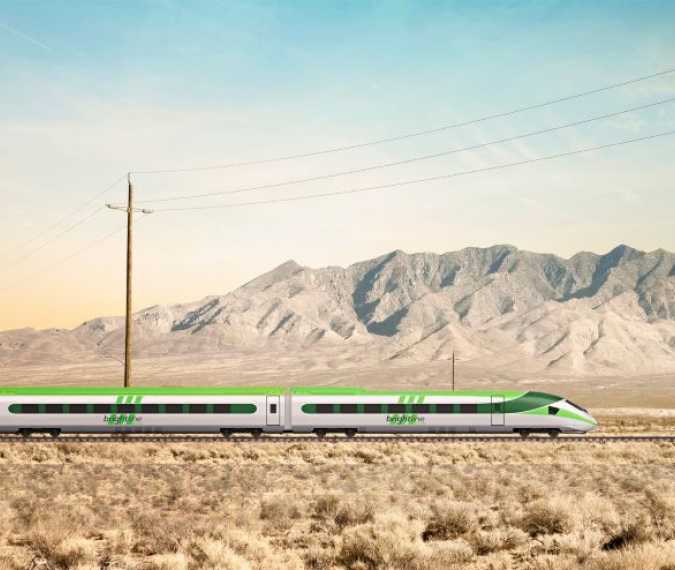
Brightline West high-speed rail project now on track for late 2029
If you were picturing yourself cruising from Las Vegas to Southern California at lightning speed—no steering wheel, no traffic, no road rage—you’ll need to keep that fantasy on hold a bit longer. The highly anticipated Brightline West high-speed rail project has pushed back its projected opening, with service now expected to begin in late 2029.
What changed?
When the project was first announced, the goal was ambitious but exciting: trains running by December 2028, just in time to ferry visitors to the Los Angeles Summer Olympics. That timeline has now slipped, meaning the rail line won’t be ready to play a role in the Olympic rush after all.
Brightline West hasn’t identified a specific cause for the delay, but large-scale infrastructure projects rarely stay on schedule. Between construction logistics, funding hurdles, and sheer scale, a revised target date isn’t all that surprising.
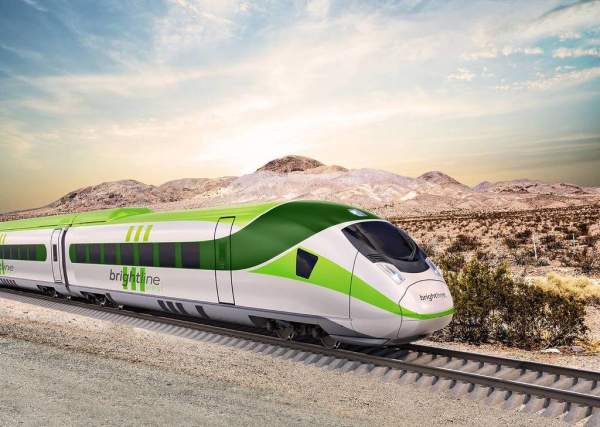
Photo: Brightline West
Progress is still happening.
Before you write this off as another stalled mega-project, it’s worth noting that real work is underway. Construction teams are actively preparing the rail corridor along the I-15 median, laying the groundwork for what will eventually become one of the fastest train routes in the country. In Las Vegas, activity is also visible near the South Premium Outlets, where the future station is taking shape.
Why this train still matters
Once completed, Brightline West will cover 218 miles on an all-electric track, with trains reaching speeds of up to 200 miles per hour. That means travelers could get from Las Vegas to Rancho Cucamonga in about two hours—a huge upgrade from the often brutal drive. From there, passengers can connect to Metrolink for onward travel to downtown Los Angeles.
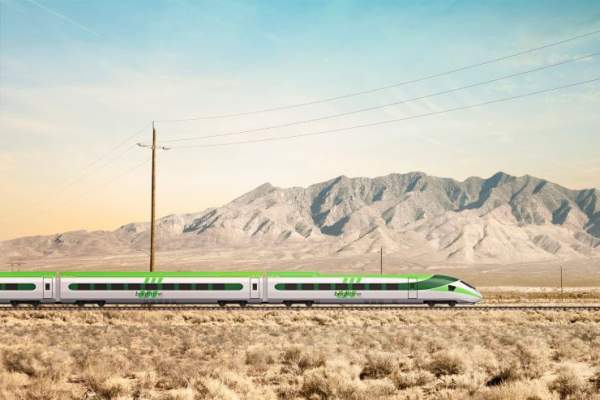
Photo: Photo: Brightline West
Rising costs, bigger funding needs
Like the timeline, the budget has also grown. Initial estimates of around $16 billion have climbed to roughly $21.5 billion, prompting Brightline to pursue a substantial federal loan to keep the project moving forward.
The bottom line
Yes, the delay is frustrating—especially for anyone who’s ever spent a Sunday afternoon crawling back to California on the I-15. But the long-term vision hasn’t changed. A fast, car-free link between Las Vegas and Southern California is still coming. It’s just taking a little longer to arrive.
For now, patience is the price of progress—but the promise of skipping that infamous traffic jam is very much alive.