Having one of these 50 surnames could mean you are related to the Royal Family
A familiar name in a history book can spark an intriguing question: could that family be connected to yours?
Across Britain and Ireland, certain surnames have long associations with monarchs, dukes, marquesses and earls. Some belong to families with documented royal descent. Others are known for their titles, estates or marriages into the Royal Family.
However, a shared surname does not prove a shared family tree. Unrelated families can carry the same name, while descendants of the same ancestor may have entirely different surnames.
With that distinction in mind, these 50 names offer an interesting introduction to royal and aristocratic history.
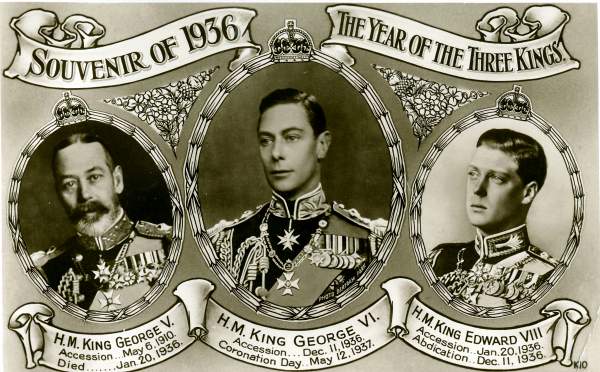
Photo: unsplash.com
Names with close royal associations
Two of the most recognizable names are Windsor and Mountbatten-Windsor. George V adopted Windsor as the royal house name in 1917. Mountbatten-Windsor subsequently became the surname used by certain descendants of Elizabeth II and Prince Philip.
Other names became closely connected to the monarchy through marriage.
Windsor: The name Britain’s royal house adopted during George V's reign.
Mountbatten-Windsor: A surname combining the names of Elizabeth II’s royal house and Prince Philip’s family.
Bowes-Lyon: The family name of Queen Elizabeth, the Queen Mother, whose father was the Earl of Strathmore and Kinghorne.
Spencer: Diana, Princess of Wales, belonged to the aristocratic Spencer family, whose titles include Earl Spencer.
Photo: unsplash.com
Surnames associated with dukedoms
A duke holds the highest rank in the British peerage, but a dukedom does not automatically make its holder a member of the Royal Family. These names belong to families associated with some of the best-known dukedoms in Britain and Ireland.
Howard / Fitzalan-Howard: Associated with the Dukes of Norfolk and a long history in English aristocratic life.
Seymour: Linked to the Dukes of Somerset; Jane Seymour, Henry VIII’s third wife, belonged to this family.
Somerset: The surname of the Dukes of Beaufort, whose ancestry traces back through the Beaufort family to John of Gaunt.
FitzRoy: Associated with the Dukes of Grafton, descended from Charles II and Barbara Villiers.
Beauclerk: The Dukes of St Albans descend from Charles II and the actress Nell Gwyn.
Gordon-Lennox: Connected to the Dukes of Richmond, whose family also descends from Charles II.
Montagu Douglas Scott: Associated with the Dukes of Buccleuch and Queensberry, with ancestry that includes Charles II’s son James Scott.
Russell: The family name of the Dukes of Bedford.
Cavendish: Associated with the Dukes of Devonshire and Chatsworth House.
Spencer-Churchill: Linked to the Dukes of Marlborough and Blenheim Palace, Winston Churchill's birthplace.
Manners: Associated with the Dukes of Rutland and Belvoir Castle.
Percy: A prominent name in Northumberland's history, associated with its dukes and Alnwick Castle.
Grosvenor: Connected to the Dukes of Westminster and extensive historic property interests in London.
Wellesley: The surname of the Dukes of Wellington, beginning with the military commander Arthur Wellesley.
Campbell: Associated with the Dukes of Argyll.
Murray: Linked to the Dukes of Atholl.
Photo: unsplash.com
Graham: The family name associated with the Dukes of Montrose.
Douglas-Hamilton: Connected to the Dukes of Hamilton and Brandon.
Innes-Ker: Associated with the Dukes of Roxburghe.
Egerton: A family whose members inherited the dukedom of Sutherland in 1963.
FitzGerald: Linked to the Dukes of Leinster, an important family in Irish aristocratic history.
Hamilton: Associated with the Dukes of Abercorn.
Montagu: The surname associated with the Dukes of Manchester.
Carnegie: Linked to the Dukes of Fife, whose family connections include descent from Edward VII.
Photo: unsplash.com
Names connected to marquessates
Below dukes in the peerage are marquesses. Several families in this group are also associated with well-known historic houses.
Thynn: Connected to the Marquesses of Bath and Longleat.
Cecil: Different branches hold the titles Marquess of Salisbury and Marquess of Exeter, associated with Hatfield House and Burghley House respectively.
Paget: The family name of the Marquesses of Anglesey.
Cholmondeley: Associated with the Marquesses of Cholmondeley; pronounced: “Chumley.”
Hervey: Linked to the Marquesses of Bristol.
Crichton-Stuart: The family name of the Marquesses of Bute.
Compton: Associated with the Marquesses of Northampton.
Kerr: Connected to the Marquesses of Lothian.
Brudenell-Bruce: Linked to the Marquesses of Ailesbury.
Photo: unsplash.com
Surnames associated with earldoms
These names connect to families whose histories include royal marriages, political careers, and famous country houses.
Stanley: Associated with the Earls of Derby; the Derby horse race was named after the 12th Earl.
Herbert: Different branches are associated with the Earls of Pembroke and Carnarvon. Pembroke’s family seat is Wilton House, while Highclere Castle is associated with the Carnarvon branch.
Lascelles: Linked to the Earls of Harewood. The sixth Earl married Princess Mary, daughter of George V.
Chetwynd-Talbot: Associated with the Earls of Shrewsbury.
Armstrong-Jones: Connected to the Earls of Snowdon through Antony Armstrong-Jones, who married Princess Margaret.
Ogilvy: Associated with the Earls of Airlie. Angus Ogilvy, the 12th Earl's younger son, married Princess Alexandra.
Coke: Linked to the Earls of Leicester and Holkham Hall.
Lowther: Associated with the Earls of Lonsdale; the fifth Earl is remembered in boxing through the Lonsdale Belt.
Cadogan: Connected to the Earls Cadogan and the family’s historic estate in Chelsea.
Primrose: The surname of the Earls of Rosebery, including former prime minister Archibald Primrose.
Grey: Associated with the Earls Grey; the tea bears the name of Charles Grey, the second Earl.
Windsor-Clive: Linked to the Earls of Plymouth. The presence of “Windsor” in this surname does not, by itself, establish a connection to the royal house.
Bruce: Associated with the Earls of Elgin, including the seventh Earl, whose name became attached to the Parthenon sculptures known as the Elgin Marbles.
What if your surname appears here?
Treat it as a reason to investigate, rather than a conclusion about your ancestry.
Begin with relatives you can identify confidently, then work backward using birth, marriage and death certificates, census entries and parish records. Dates, places and documented relationships matter much more than a matching surname.
It is also worth exploring every branch of your family. Your surname represents only one part of your ancestry, and a connection through a grandmother or another female ancestor may involve a name you have never carried.
Finding a royal or aristocratic ancestor would be an interesting discovery. But the real value of researching your family history is learning who your ancestors were, where they lived, and how their lives helped shape yours.