

London officially has the worst traffic in Europe
If you’ve ever felt like getting across London takes longer than the journey itself, you’re not imagining it. New research has officially crowned London as the most traffic-clogged capital city in the world, and the findings don’t make for pleasant reading for drivers.
According to the latest TomTom Traffic Index, motorists in London collectively spent the equivalent of nearly six full days sitting in traffic over the past year. Not only does this make London the slowest city in Europe for road travel, but it also places it second worldwide, behind only Barranquilla in Colombia.
What’s more frustrating for locals is that congestion in the UK capital is getting worse, not better. Between 2024 and 2025, the average time needed to travel just one kilometre increased from 3 minutes 34 seconds to 3 minutes 38 seconds. While four seconds might not sound like much, it adds up quickly over thousands of daily journeys.
TomTom’s congestion score — which compares ideal, free-flowing conditions with real-world traffic — also rose, climbing from 50.6% to 51.6% in just one year. Even when roads were theoretically clear, travel times didn’t improve, with free-flow speeds slowing slightly to 2 minutes and 23 seconds per kilometre.
The report suggests that infrastructure changes alone may not be enough to ease the problem. Analysts noted that the lack of improvement in free-flow traffic indicates that London’s road network is struggling to move vehicles efficiently through the city’s busiest areas.
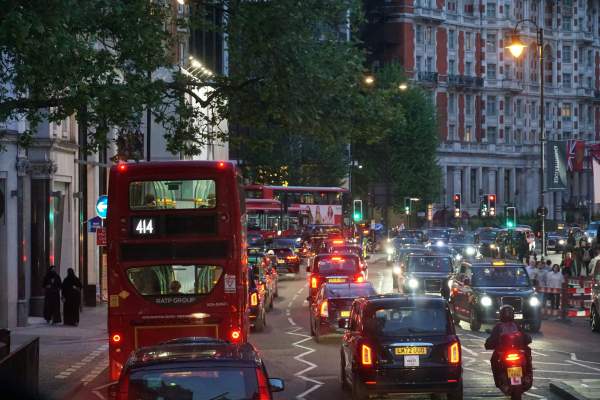
Photo: unsplash.com/@qld_traveller
On an individual level, the impact is significant. The average London driver lost 141 hours to rush-hour congestion in 2025 — the equivalent of five days and 21 hours spent going nowhere fast. That figure places London among the top 20 cities globally for time wasted in traffic.
In the global rankings, London was slower than major cities such as Bengaluru and Kolkata in India, as well as Dublin, Mexico City, Lima, Kyoto, and Davao City. For a city famed for its pace and ambition, the reality on the roads tells a very different story.
For visitors planning to explore London, the takeaway is clear: public transport, walking, and cycling remain far more efficient ways to experience the city than driving.