
Meteorologist warns ‘super El Niño’ has become ‘mega El Niño’ as ocean hotspot hits 10C above normal
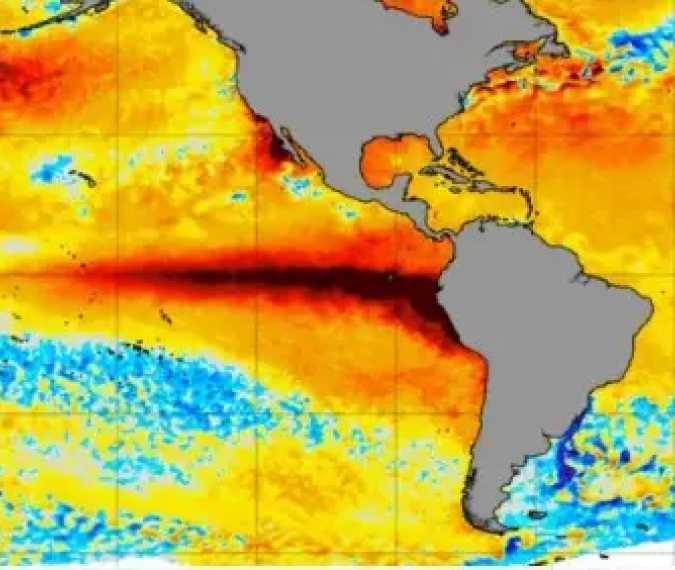
Around the Galápagos Islands, cold water rising from the deep helps feed everything from tiny plankton to sea lions. This November, a Pacific temperature map showed just how much conditions have changed. On 22 November, meteorologist Ryan Maue reported that sea-surface temperatures in parts of the eastern Pacific near the islands and off Peru were as much as 10°C warmer than usual for the time of year. BioBioChile
Maue called the event a “mega El Niño”. That was his description of the map. The 10°C figure applied to a local hotspot within a much broader band of warm water stretching west from South America. In its 9 November climate update, the World Meteorological Organization said El Niño had strengthened since August and was expected to reach record strength by December. BioBioChile
Why warmer seas can mean less food
The danger for Galápagos wildlife begins with a change that is hard to see from shore. Cold water normally carries nutrients towards the sunlit surface, where microscopic organisms called phytoplankton use them to grow. During El Niño, that upward flow weakens. As the food supply dwindles, fish become harder for penguins and sea lions to find, especially when they have young to feed. Scientists at the Charles Darwin Foundation reported in September that warming waters and shifting currents were already affecting the islands’ food web. NOAA Climate.gov
What it could mean for Britain’s winter
For Britain, the timing matters. The Met Office says strong El Niño events can favor a mild, wet start to winter, with a greater chance of colder, drier spells later on. In its 19 November outlook, forecasters said their models gave extra weight to that colder, drier pattern. A seasonal forecast can identify those shifts in likelihood, but it cannot tell a household when or where a storm will strike. metoffice.gov.uk
The global effects could outlast the Pacific temperature peak. As the ocean releases heat into the atmosphere, the World Meteorological Organization expects higher risks of extreme heat, drought and heavy rainfall in different parts of the world well into 2027. wmo.int