
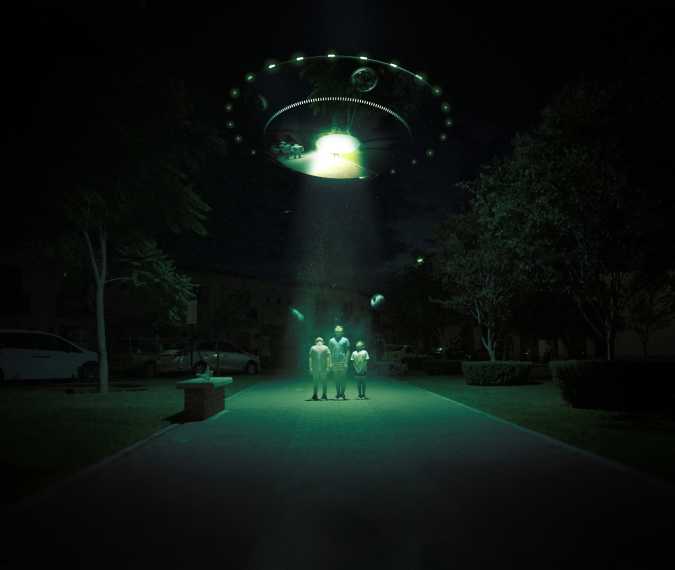
Aliens could reach Earth in 16 days, says Harvard professor
A viral claim has linked Harvard astronomer Avi Loeb to a prediction that extraterrestrials would reveal themselves within 16 days. Loeb has denied making that prediction, rejecting the supposed countdown during an appearance on NewsNation.
The controversy brings together two very different ideas: a social media claim about an imminent alien appearance and a documented wager about whether convincing evidence of extraterrestrial visitation will emerge by the end of 2030.
According to reporting on his interview with Jesse Weber, Loeb accused those circulating the claim of misrepresenting his comments to attract attention. His accusation describes what he believes motivated the posts; it does not independently establish why individual accounts shared them.

Photo: unsplash.com
The real wager requires scientific confirmation.
The public record of Loeb’s bet provides a much clearer account of his position. Registered with the Long Now Foundation’s Long Bets programme, it names science historian Michael Shermer as the predictor and Loeb as the challenger, with $1,000 at stake.
Shermer’s position is that qualifying evidence of alien visitation will not be confirmed by 31 December 2030. Loeb has taken the opposing side.
The agreement sets a specific threshold: at least two of three organizations—NASA, the National Science Foundation and the American Astronomical Society—must affirm a qualifying discovery. The terms cover objects established to be extraterrestrial technology, including relevant unidentified anomalous phenomena or interstellar objects, as well as alien biological life found on Earth.
The Galileo Project Foundation receives the stake whichever participant wins. Nothing in the agreement requires a public appearance by extraterrestrial beings or establishes a countdown to their arrival. It is a wager on confirming evidence by a deadline.
Photo: unsplash.com
Why 3I/ATLAS enters the discussion
Loeb’s willingness to consider artificial explanations for unusual astronomical objects has helped draw attention to his work. In 2025, he explored the possibility that the interstellar object 3I/ATLAS could have an extraterrestrial technological origin. That suggestion was a hypothesis, not a confirmed discovery.
NASA classifies 3I/ATLAS as a comet. First reported on 1 July 2025, it displays an icy nucleus and a surrounding cloud of gas and dust. The agency says its observed characteristics match cometary behavior. Its origin outside our solar system makes it scientifically valuable, but it does not establish that an alien civilization manufactured it.
An unexplained sighting is only a starting point.
The same distinction applies to UFO and UAP reports. An observation can remain unresolved without providing evidence of extraterrestrial technology.
In its 2024 historical review, the Pentagon’s All-domain Anomaly Resolution Office reported finding no verified evidence that the UAP sightings it examined represented extraterrestrial activity or technology. That finding concerns the evidence reviewed; it does not settle the broader question of whether life exists elsewhere in the universe.
For readers encountering the viral countdown, the essential distinction is straightforward: Loeb has rejected the prediction attributed to him. His documented wager concerns a possible future discovery that must meet stated confirmation requirements. Neither the bet nor his interest in extraterrestrial research provides a basis for expecting aliens to appear within 16 days.