
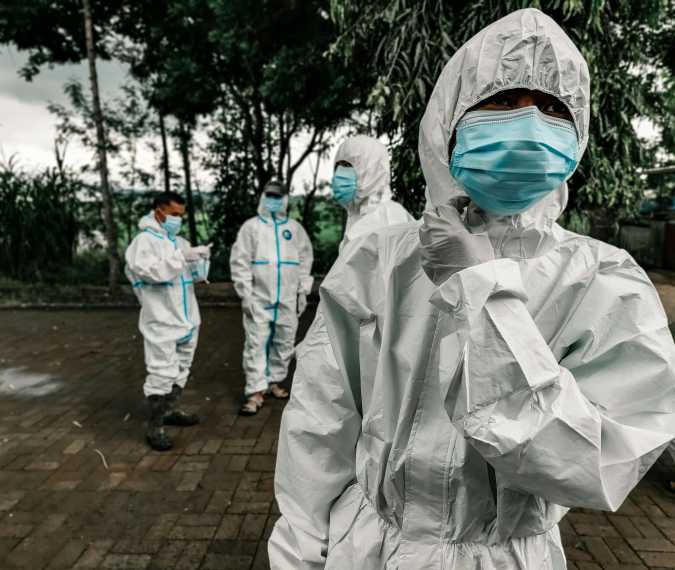
WHO Issues Global Health Emergency Alert Over Ebola Crisis in Central Africa
The World Health Organization (WHO) has announced an international health emergency after a dangerous Ebola outbreak in the Democratic Republic of Congo (DRC) raised growing concern among health authorities. The outbreak involves a highly infectious strain for which no approved vaccine or targeted treatment currently exists.
Health officials report that more than 80 people have died, while hundreds of additional infections are suspected. According to the Africa Centres for Disease Control and Prevention, authorities have documented 336 possible cases and 88 deaths linked to the outbreak.
WHO, headquartered in Geneva, classified the situation as a “public health emergency of international concern,” marking one of the organization’s highest warning levels under global health regulations. Officials stressed that the actual scale of infections may be larger than current figures indicate. However, the agency stopped short of declaring a pandemic-level emergency — a category introduced in 2024 for the most severe global threats.
The current outbreak has been traced to the Bundibugyo strain of Ebola, a variant first discovered in 2007. Unlike the Zaire strain, vaccines are not available for this form of the virus. The Zaire variant, identified in 1976, is considered even more lethal, with fatality rates ranging between 60 and 90 percent.
DR Congo’s Health Minister, Samuel-Roger Kamba, warned that the Bundibugyo strain presents a serious threat because of its lack of treatment options and high death rate.
Authorities say the outbreak has already crossed borders. Officials confirmed that a Congolese patient infected with the virus died in neighboring Uganda, raising fears of wider regional transmission.
The latest outbreak was identified in Ituri province in northeastern DRC, an area close to both Uganda and South Sudan. According to officials, the first known patient was a nurse who sought treatment in Bunia, the provincial capital, on April 24 after showing symptoms associated with Ebola.
People infected with Ebola often experience symptoms including fever, vomiting, internal bleeding, and severe illness. The virus spreads through direct contact with infected bodily fluids and blood, with infected individuals becoming contagious after symptoms appear. The incubation period can last as long as 21 days.
Medical humanitarian organization Doctors Without Borders (MSF) has begun preparing a large emergency operation. The group warned that the speed and geographic spread of cases are deeply worrying.
MSF Emergency Programme Manager Trish Newport said the rapid increase in infections and deaths, along with the appearance of cases in multiple health zones and across international borders, points to a highly concerning situation.
Local communities have described difficult conditions on the ground. Reports indicate that health facilities lack sufficient isolation spaces, forcing some patients to remain at home where family members may unknowingly increase transmission risks.
Managing a large-scale medical response presents significant challenges in the DRC. Although home to more than 100 million people, the country’s infrastructure and transportation systems remain limited, making the delivery of medical supplies and personnel difficult.
Health experts also warned that this could become a much larger outbreak than currently documented. WHO noted uncertainty surrounding both the true number of infections and the extent of geographic spread.
The DRC has faced repeated Ebola crises, with this becoming the country’s 17th recorded outbreak. Ebola has killed approximately 15,000 people across Africa over the past five decades despite progress in medical treatment and prevention.
The deadliest outbreak in the DRC occurred between 2018 and 2020, claiming nearly 2,300 lives. More recently, another outbreak in central regions of the country resulted in at least 34 deaths before being declared over last December.
Scientists believe Ebola originated in bats. The disease can trigger severe bleeding, organ failure, and life-threatening complications. Historical outbreaks have shown mortality rates ranging from 25 percent to as high as 90 percent, depending on the strain and healthcare response.
As authorities continue monitoring the situation, health organizations remain concerned about the possibility of further regional spread in Central Africa.