
What Should You Do If a Plane Passenger Puts a Suitcase in Your Overhead Bin? Here’s What Flight Attendants Say
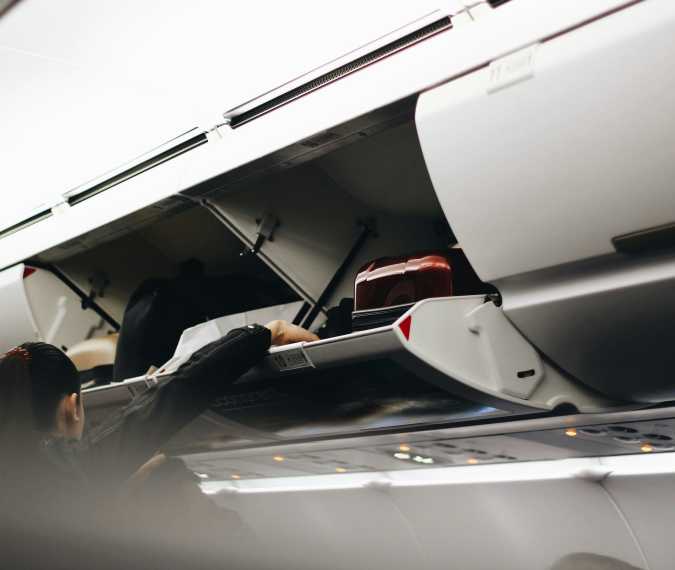
Finding room for your carry-on can be one of the most frustrating parts of boarding. You reach your seat, look up, and find the overhead compartment already packed—even though some of the bags belong to passengers sitting elsewhere.
Before asking anyone to move their luggage, it helps to understand the distinction between a convenient storage spot and an assigned one.
Does your seat come with overhead space?
The flight attendants quoted in the source article offer different perspectives. Natalie Magee considers the compartment above a row informally intended for the passengers sitting beneath it. Ally Case and longtime flight attendant Aura E. Martinez describe overhead storage as shared space, generally available on a first-come basis.
Those views reflect different expectations about courtesy. They do not establish a universal airline policy guaranteeing that the compartment above your seat will be available to you.
Look for a solution before moving a bag.
If the nearest bin is full, check for an opening a few rows away. A spot close to your seat, preferably above or ahead of your row, can make collecting your suitcase easier when it is time to leave.
Storing luggage behind you may mean waiting for the aisle to clear before you can retrieve it. When that is the only available option, ask a flight attendant for guidance.
Avoid taking another passenger’s suitcase out or relocating it yourself. Cabin crew can assess the remaining space and help resolve a storage problem without turning it into a disagreement between travelers.
Make room by choosing what goes overhead.
Efficient use of the bins starts with smaller belongings. Where permitted and where they fit, keep items such as purses and small backpacks under the seat in front of you, leaving overhead room for larger carry-ons.
Coats can also take up space that suitcases need during boarding. Magee recommends holding onto yours until boarding is complete, then placing it overhead if room remains.
The most useful approach is to stay flexible: look nearby, be considerate of how much space your belongings take up, and involve the crew when you need help. An already-full compartment is an inconvenience, but it does not have to become a confrontation.

