
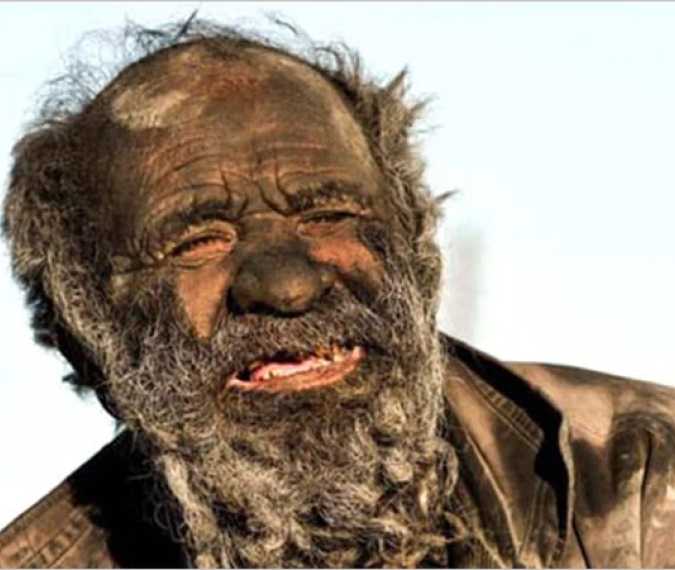
‘World’s dirtiest man’ didn’t wash for 60 years and died soon after he finally decided to have a bath
For decades, Amou Haji lived an isolated life near the village of Dejgah in southern Iran’s Fars province. His refusal to bathe attracted international attention and earned him the media nickname “the world’s dirtiest man.” When he died on 23 October 2022, aged 94, reports that he had recently washed brought his story back into the headlines.
Haji reportedly avoided bathing because he feared it would make him ill. Accounts differ on exactly how long he went without washing, but contemporary coverage described more than half a century. According to AFP, citing Iran’s IRNA news agency, villagers eventually persuaded him to bathe a few months before his death.
His daily life was far removed from ordinary village routines. Residents built him a small brick shelter, providing somewhere to sleep in the landscape where he lived. Villagers attributed his withdrawal from society to emotional difficulties earlier in life, although those accounts offer only a limited picture of his personal history.
Stories about his habits fueled public fascination. Reports described heavy smoking, eating meat from dead animals, and drinking water from a rusty container. Some of the most striking details, including his supposed preference for decaying porcupine meat, circulated as claims about his lifestyle rather than independently verified facts.
Interest in Haji predated the coverage of his death. Iranian media reported that a short documentary, The Strange Life of Amou Haji, was made about him in 2013. It reflected the attention his unusual way of life had already attracted.
The timing of his final bath became central to his obituary coverage. However, the reports cited here do not establish that washing caused his death. One event preceding another does not prove a connection.
Behind the sensational nickname was a man whose private fears and personal history were only partly documented. His story deserves that distinction: the reported details of an unusual life should not be mistaken for a medical explanation of how it ended.