Baba Vanga's chilling prediction reveals when the world could end as scientists get it wrong
November 13, 2026, has passed, bringing renewed attention to an unusually precise “doomsday” date published more than six decades ago. Alongside it, alleged predictions attributed to Bulgarian mystic Baba Vanga continue to circulate, including claims about humanity's distant end.
Yet these stories have very different foundations. One comes from a published mathematical model with an explicit condition. The other rests on predictions whose origins are difficult to verify.
In November 1960, Heinz von Foerster, Patricia M. Mora and Lawrence W. Amiot published a paper in Science titled Doomsday: Friday, 13 November, A.D. 2026. Its subtitle explained the premise: the human population would approach infinity on that date if historical growth patterns continued. That condition is essential to understanding the claim.
Extending a mathematical trend until it produces an impossible result does not establish a reliable date for humanity’s destruction. It shows that the trend cannot continue indefinitely. In this case, the crucial question was how population growth would change.
Subsequent demographic developments produced a different outlook. The United Nations’ 2024 population assessment projected that the global population would rise from approximately 8.2 billion in 2024 to around 10.3 billion in the mid-2080s, before gradually declining. Falling fertility was a major reason for the lower and earlier projected peak. These figures are projections, but they describe a very different trajectory from endlessly accelerating growth.
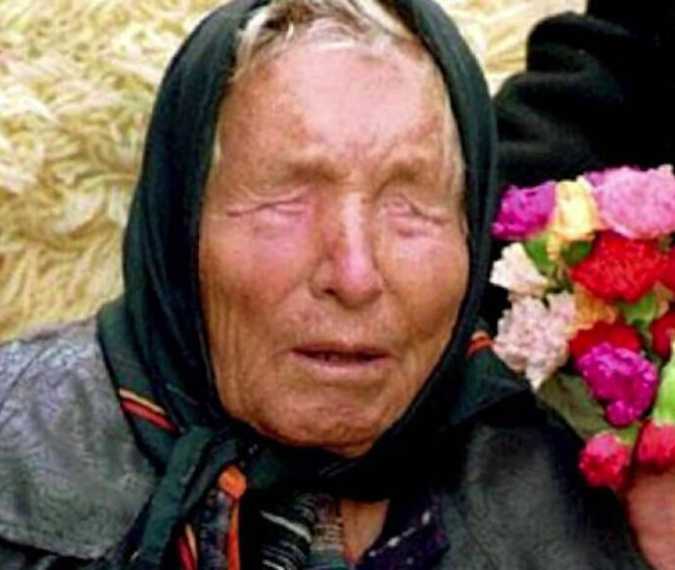
The claims associated with Baba Vanga require a different kind of scrutiny. The Bulgarian mystic, who died in 1996, is frequently credited with foreseeing major events. Online timelines also attribute extraordinary developments to her, extending thousands of years into the future.
The end date commonly repeated in these accounts is 5079. However, repetition does not authenticate a prophecy. An examination published by The Skeptic highlighted the absence of an authoritative source document for the circulating predictions and reported that people who knew Vanga disputed apocalyptic statements attributed to her.
That makes it misleading to present the distant date as an established prediction, let alone a credible forecast. Claims of an exceptionally high success rate also require evidence: a documented set of predictions, proof they existed before the events, and consistent criteria for counting both successes and failures.
The lasting interest in these stories is understandable. An exact date gives uncertainty a memorable shape. But precision alone doesn't guarantee accuracy. Before accepting any dramatic forecast, the useful questions remain the same: where did it originate, what assumptions support it, and can its claims be checked?

